 Asset Publisher
Tablice EN
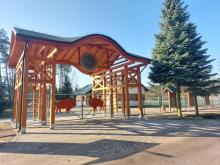
1. WELCOME TO THE BISON DEMONSTRATION ENCLOSURE
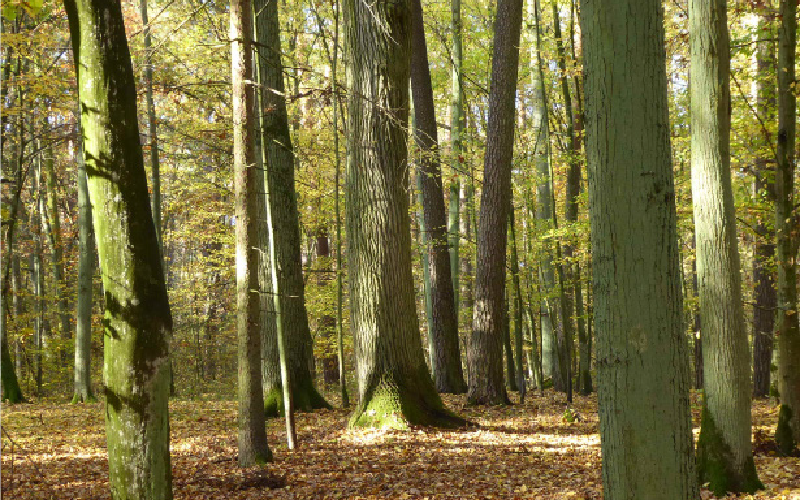
We are in the Mława Forest located in the northern part of the town. It borders directly on urbanized areas, which makes it a natural recreation and relaxation area for residents of Mława.
This area is located within the Zieluń-Rzęgnowo Protected Landscape Area, a real gem in the Mława Hills region. These hilly areas with embankments and moraine hills over 180 meters above sea level create a picturesque landscape mosaic. Łysa Góra towers over the southern edge of the forest, offering a stunning panorama of the town.
Due to poor soil, pine forests dominate. The Mława Forest attracts local people to go hiking or biking there. A charming lake in Krajewo, with an island covered with a pine forest and a swamp, is one of the most valuable natural treasures of this forest. This is destination of numerous nature expeditions.
On the northern edge of the forest, there is a section of the so-called ‘Mława position’, i.e. fortifications based on which the Battle of Mława took place in September 1939. The ‘Krajewo’ fortifications with two bunkers, the ‘Piekiełko’ fortifications with four bunkers and the ‘Dźwierznia Łysa Góra’ fortifications with four bunkers, remind us of a heroic attitude of Polish soldiers and residents.
In addition to wood production, the Mława Forest also serves many crucial natural and social functions. Its areas create favourable conditions for leisure, education, health, climate, air purification, making the landscape more attractive, nature protection and preserving historical heritage. The bison enclosure is an additional attraction of this complex, fitted perfectly into the forest and enhancing its non-production values.
Opening hours of the Bison Demonstration Enclosure(MONDAY - closed) (TUESDAY - SUNDAY) |
|---|
| April - October | 8:00 - 16:00 |
|---|---|
| November - March | 8:00 - 15:00 |
2. VISITORS TO THE BISON SHOW ENCLOSURE ARE NOT ALLOWED TO
 |
SCARE ANIMALS |
 |
CLIMB ON THE FENCE |
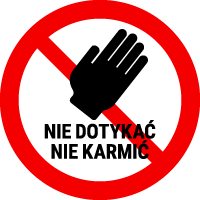 |
FEED AND TOUCH ANIMALS |
 |
TURN ASIDE FROM THE DESIGNATED PATHS |
 |
LET PETS IN |
 |
SMOKE CIGARETTES |
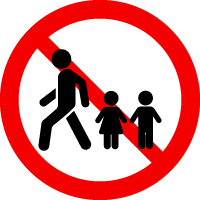 |
LEAVE CHILDREN UNATTENDED |
 |
CONSUME ALCOHOLIC DRINKS |
 |
DAMAGE TREES AND PLANTS |
 |
USE POWER-DRIVEN VEHICLES |
 |
DAMAGE DEVICES AND OBJECTS |
 |
DISTURB THE SILENCE |
 |
LITTER |
3. THE EUROPEAN BISON POPULATION DISTRIBUTION IN POLAND
The world population of bison at the end of 2022 stood at almost 10,500 specimens, including exactly 2,603 of them in Poland, of which 2,494 lived in the wild and over 200 in closed breeding farms. In recent years, there has been a substantial rise in the bison population. Just a decade ago, there were half as many of them in the world, less than 4,500. This success is the result of both the execution of many species conservation projects based in Europe, as well as close international cooperation. A significant increase in the number of herds and population proves the effectiveness of measures taken and the necessity to continue them.
The Warsaw University of Life Sciences, together with the State Forests, the Białowieża National Park and the European Bison Friends Society have been implementing projects ensuring active protection of the bison population for many years.

CLOSED BREEDING FARMS

FREE HERDS
IN 2023, THREE NEW ENCLOSURE WERE PUT INTO USE IN THE FOREST DISTRICTS in Dwukoły, Rybnik, Supraśl.
4. WHAT DO BISON FEED ON?
Bison feeds mainly on grasses and sedges. Their habitats are also home to many other species, which is why bison is considered a protective species, also known as an ‘umbrella species’. In captivity, proper nutrition must be provided to ensure animal welfare. Bison, as ruminants, make excellent use of plants with high fibre content, such as branches of trees and shrubs, or bark. Therefore, it is important that bison breeding areas provide enough natural food and appropriate conditions for rest.
In the wild, bison prefer open grassland next to forest, such as meadows, clearings or forest gaps. When they feed on the forest undergrowth, they never stay in the same place for too long, which allows plants to regenerate.
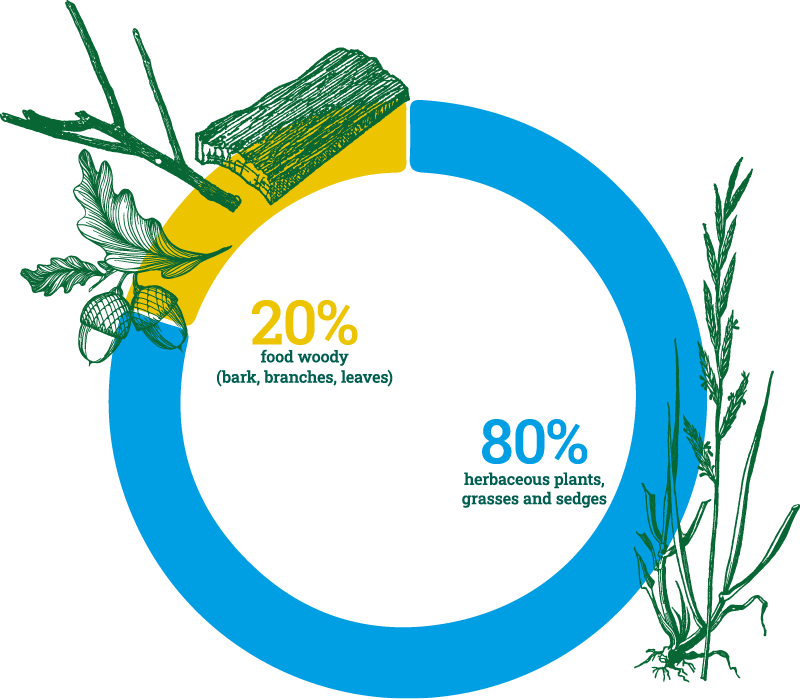
95% of the feeding time is spent in meadows and mid-forest meadows. Bison spend 3% of their feeding time on browsing leaves and young shoots, and 2% on biting branches, mainly in early spring.
FUN FACT
bison do not eat sweet grass, commonly also known as ‘bison grass’; it is only a name derived from the term ‘bison forest’.
5. Safety regulations on the premises of the Bison Demonstration Enclosure in Krajewo for individual visitors and organized groups
1. Individual visitors and organized groups visiting the Bison Demonstration Enclosure are asked to:
- behave in a disciplined and polite manner,
- comply with instructions given by guardians and educators,
- not walk away from the group without prior arrangement and consent of a guardian,
- treat other people visiting the Bison Demonstration Enclosure with respect,
- handle the Bison Demonstration Enclosure equipment with care,
- not to drink alcohol, take drugs and smoking tobacco.
Admission to the Bison Demonstration Enclosure is allowed only during opening hours and is free of charge.
2. Admission to the Bison Demonstration Enclosure is allowed only during opening hours and is free of charge.
3. People visiting the Enclosure are obliged to follow the applicable rules of conduct and read the information about threats and safety rules referred to below.
3.a. Rules of conduct on the Bison Demonstration Enclosure premises:
- Do not litter.
- Do not make noise.
- The Bison Demonstration Enclosure area is reserved for pedestrians only.
- Motor vehicles or bicycles are not allowed.
- Do not pick plants, destroy or damage trees and shrubs.
- Do not give additional food to bison or scare them away.
- Dogs are not allowed.
- Do not leap over the fence or put your hands through the fence.
- Do not destroy tourist equipment, signs or boards.
- Do not wander off designated walking trails.
- Do not use fire and pay attention to fire safety.
3.b. Responsibilities of a group tour guide on the Bison Demonstration Enclosure premises
- Providing care and safety to visitors throughout the entire visit.
- Supervising the compliance with applicable rules for safe participation in classes.
- Keeping the premises clean.
- Counting the group members from time to time, including after classes.
- Informing visitors about the need to wear appropriate clothing.
RISK INFORMATION:
|
In certain situations, the following factors may pose various threats within the Bison Demonstration Enclosure and the areas adjacent to it:
|
6. HISTORY OF BISON RESTITUTION #100YearsofBisonProtection
The increase in the bison population is a remarkable success for Polish nature conservation, but it does not mean that the species is safe. Low genetic diversity, relatively low global population size and numerous threats, both population and environmental, mean that European bison still needs help based on understanding the biology of the species.
|
HOW SCIENTISTS AND FORESTERS SAVED THE KING OF POLISH NATURE FROM EXTINCTION |
1915 – 785 specimens lived in the Białowieża Forest.
1919 – the last bison in the Białowieża Forest died. In the years 1920-1928, bison vanished from the forest.
1923 – Jan Sztolcman presented a project to save the species during the International Congress for the Conservation of Nature in Paris. There were 54 bison left in the world at that time. The International Society for the Protection of the European Bison was founded that year.
1929 – a breeding sanctuary was put in use in the Białowieża Forest, where two bison named BORUSSE and BISERTA arrived.
1930 – BISKAYA joined the two bison in the sanctuary.
1932 – the first Bison Pedigree Book was published (in Germany).
1936 – a bull named PLISCH was brought to Białowieża from Pszczyna; he played a significant role in the restitution of the Białowieża bison population as he became the father of 45 calves.
1938 – the European bison can enjoy species protection under the Regulation of the Minister of Religion and Public Enlightenment.
1944 – there were 44 bison in Poland, of which 17 in the Białowieża Forest.
1947– the first edition of the Bison Pedigree Book in Poland.
1952 – bison returned to the natural environment, POMRUK and POPAS were set free in the Białowieża Forest (in the part that belonged to Poland).
1953 – as a result of hoof-and-mouth disease, the entire herd of Pszczyna bison died.
1962 – bison were set free in the Borki Forest.
1964 – bison were set free in the Bieszczady Mountains.
1973 – bison were set free in the Knyszyn Forest.
1979 – the world's 2,000th bison was born. The male was named KARAT 2000.
1980 – the West Pomeranian free herd was formed.
2009 – a global bison population stood at 4,231 specimens, including 1,170 in Poland.
2018 – a new herd in the Augustów Forest was formed and set free.
2021 – two free herds were formed in the Janów Forest and the Rominta Forest.
2022 – there are 2,603 bison living in Poland.
2023 – three new enclosures were put into use in the Forest Districts, namely in Dwukoły, Rybnik i Supraśl.
7. FUN FACTS ABOUT BISON
All currently living bison come from 12 founders, and the lowland bison (the Białowieża ones) come from only 7 specimens.

Bison’s front legs move with the same step frequency, which prevents animals from entering swampy areas.
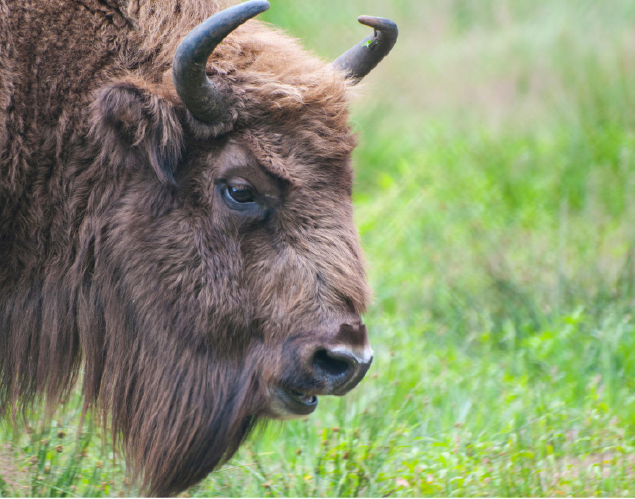
The body width depends on the spacing of the horns, ensuring efficient movement in the forest.
Their dense coat is dark to golden brown (like lowland forest), thereby making them almost invisible in winter.
A muzzle, which is a greyish-black nasolabial plate, is as unique to each bison as fingerprints are to humans.
8. FACTS ABOUT BISONS
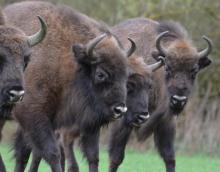
The European bison (Bos bonasus) is the largest mammal in Europe. Thanks to the efforts of scientists and foresters, the species was brought back from the brink of extinction.
While bison’s sight may not be top-notch, their sense of smell is excellent. They use this sense when they search for food or watch their young, and they can smell humans before they see them.
Bison have three coats of fur, which provide great insulation during winter. When it gets warmer, animals shed and have a new lighter coat in summer.
Bulls are much more muscular than cows, and they have a characteristic hump on their back, which gives them a distinctive and handsome silhouette.
The European bison average height at withers is 180 cm.
Their head-to-body-length is 300 cm on average.
| picture | text |
|---|---|
 |
The adult male bison weighs almost 800 kg, while females weigh approx. 550 kg. |
 |
Bison have a typical lifespan of 18-24 years in the wild. Females live longer than males. |
 |
Remember, these are wild animals! For safety, keep a safe distance from them. |
 |
80% of bison food is grass and herbaceous plants. They also eat twigs, leaves, and bark of trees and shrubs. |
 |
When anxious, bison emit a growl-like sound, known in Polish as ‘chruczenie’. Other common sounds consist of low-pitched grunts, snorts, and bellows. |
 |
They can run at speeds of up to 60 km/h. |
 |
Following a nine-month pregnancy, bison calves are usually born between May and July. |
9. THE BISON PEDIGREE BOOK
All living bison are documented in the Bison Pedigree Book. In free herds, only the number of animals is registered, while each bison born in a closed breeding farm gets a number and name – in addition to the date and place of birth, the numbers and names of the parents, as well as all information about the transport of a given specimen between different centres. From the Book’s first edition, it was decided to ‘assign’ identification letters to each farm, which became the first two letters of the name of bison born in a given place.
| description | Przykład (e.g.) | |
|---|---|---|
| PL | identyfikacyjne litery przypisane do żubrów z linii Pszczyńskiej. | PLANET, PLISH |
| PO | identyfikacyjne litery przypisane do fermy hodowlanej w Białowieży, a później do wszystkich polskich ferm hodowlanych dla czystej linii żubra nizinnego (LB). | POPAS, POMRUK |
| PU | identyfikacyjne litery przypisane do hybryd białowiesko-kaukaskich (LC). | PUZEL, PUJAN |
10. FUN FACTS ABOUT THE DWUKOŁY FOREST DISTRICT
| photo |
description |
|---|---|
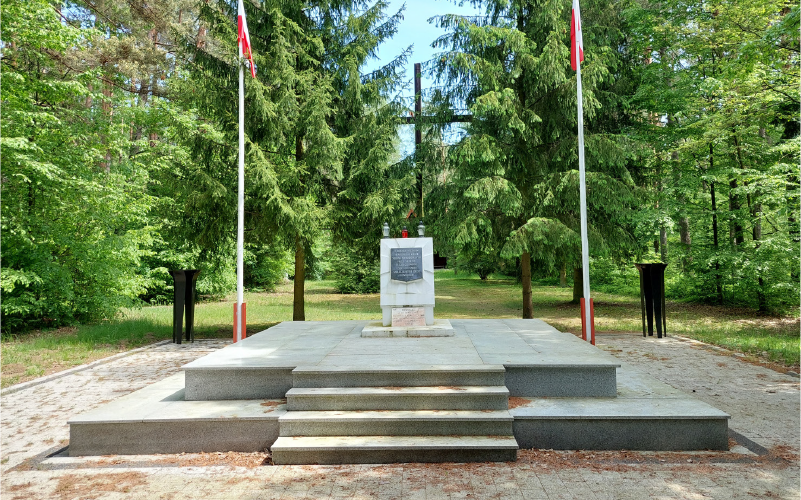 |
The Memorial Site in the Białucki Forest |
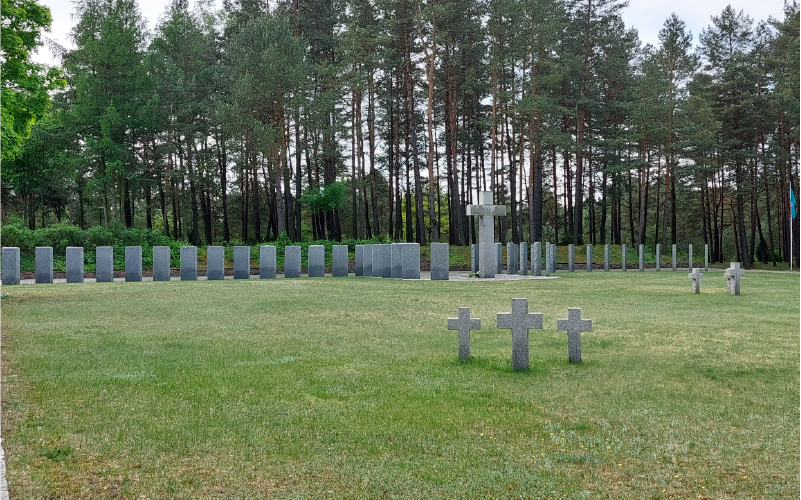 |
The Mławka German Military Cemetery |
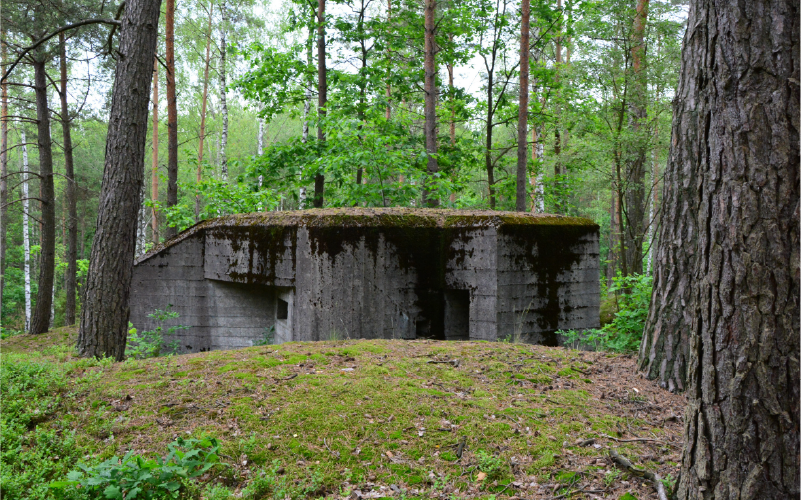 |
The ‘Piekiełko’ Bunker No. 28 |
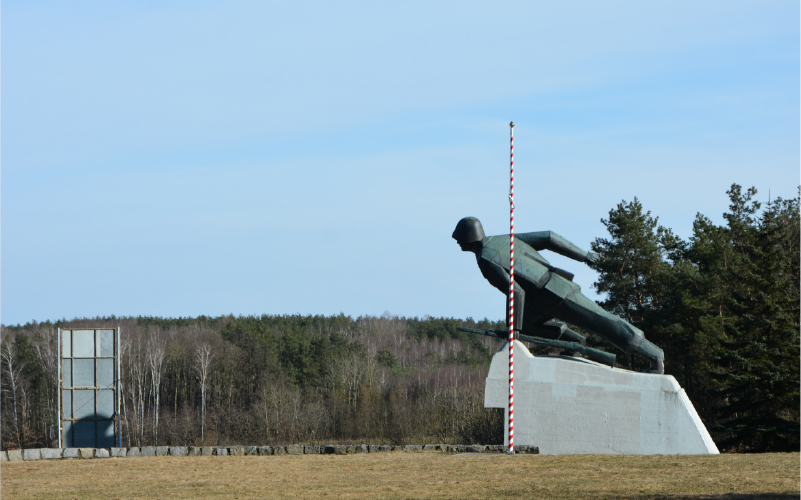 |
The Mausoleum of the September 1939 Soldiers in Uniszki Zawadzkie |
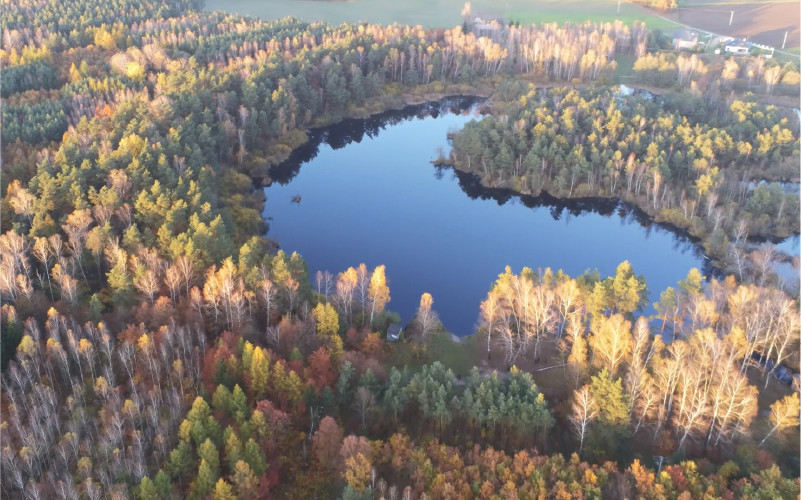 |
Lake in Krajewo |
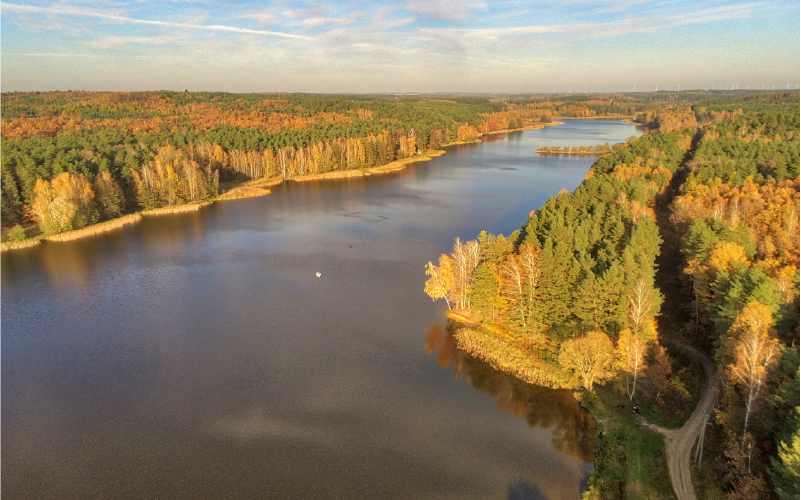 |
The Ruda Reservoir |
 |
The Góra Dębowa Forest Sanctuary |
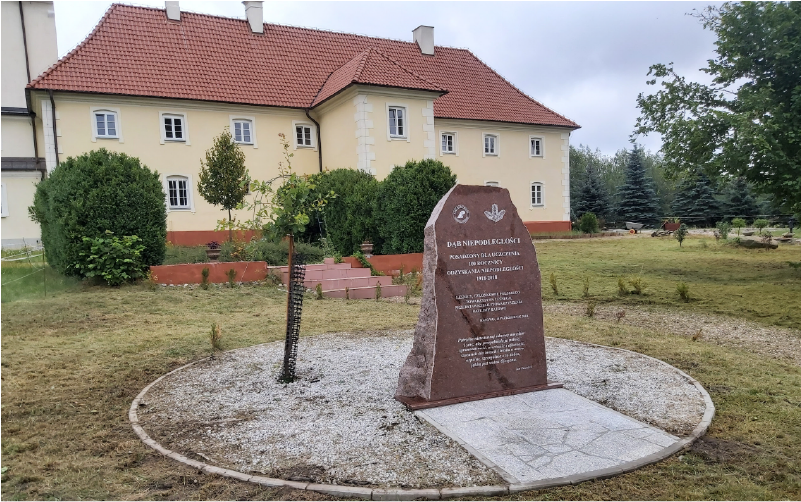 |
St. Anthony of Padua Diocesan Sanctuary in Ratów |
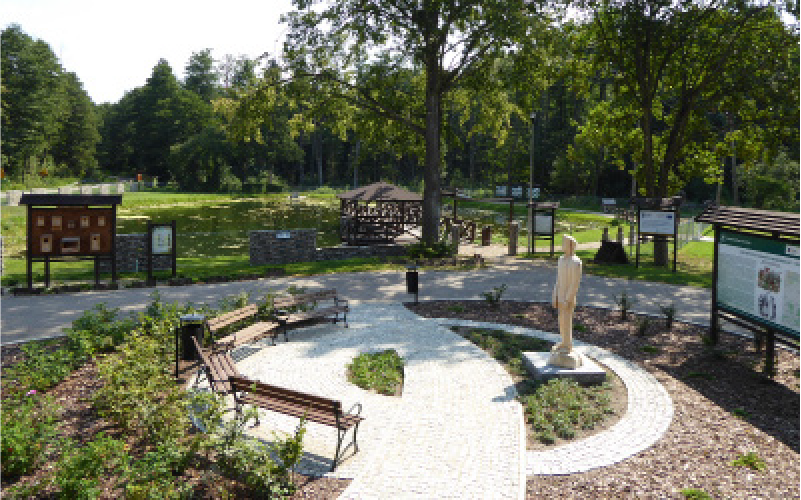 |
The pond at the headquarters of the Forest District |
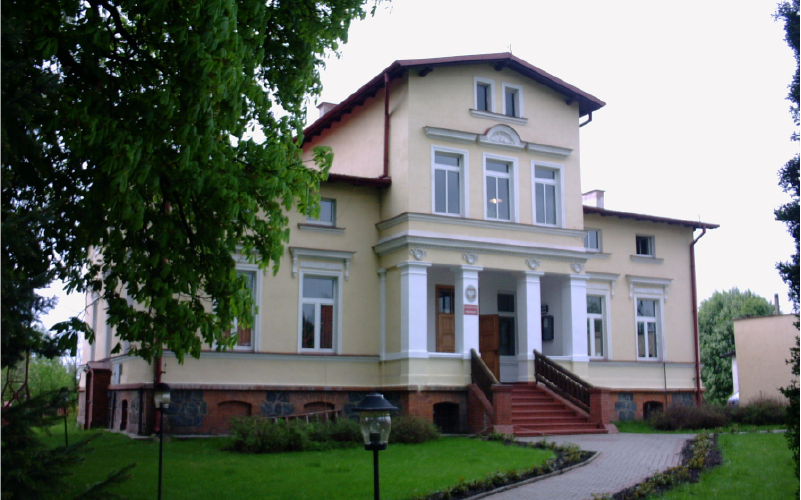 |
Headquarters of the Dwukoły Forest District |
| We encourage visitors to engage in a variety of recreational activities in the Dwukoły Forest District. Discover the beauty of the Forest District and spend quality time in nature. Enter into the forest and bird’s realm of leisure and rest. To stay up to date with all the news regarding our Forest District, please visit our Facebook page, where you will find the latest information about upcoming and current events, interesting facts about the nature and many inspiring photos of the neighbourhood. SCAN THE QR CODE AND STAY UP TO DATE |
| picture | description |
 |
The Mława Tourist Trail for Hiking and Biking |
 |
The trail wends its way through original fortifications, including bunkers (55 reinforced concrete structures have survived to this day in various condition). |
|
|
Scan for more information about the Mława Tourist Trail (digital map with the mobile application link). VISIT PLACES, COLLECT POINTS, GET A BADGE!
11. COMPREHENSIVE BISON PROTECTION
The existing free bison populations – namely from Białowieża, Knyszyn, Borki, Bieszczady, Augustów and those living in the Drawsko training ground – are now under protection. A free-ranging herd was established in the Rominta Forest and in the Janów Lubelski Forest District. The project includes taking protective measures with regard to animals living in ex-situ conditions (away from the natural location).
The project covers 90% of the national free population of this species in eight provinces and six key breeding farms. Additionally, for the stability of the species, two new herds were formed (in Janów and Gołdap) and tourist pressure on their habitats have been reduced. Most of tasks to be performed concern active protection of the species.
The primary goal of the project is to ensure the well-being of the population by performing tasks such as: (i) managing the species through ongoing monitoring of the size of the population, (ii) monitoring health condition of animals, (iii) handling free herds, including prevention and medical and veterinary services, (iv) mitigating conflict situations related to with the presence of bison (e.g. by leasing meadows on the outskirts of the Białowieża Forest), and (v) educating tourists and local people on what to do when they encounter bison as well as farmers on how to prevent damage.
| MONITORING |
| PREVENTING DAMAGE |
|
| IMPROVING ENVIRONMENTAL CONDITIONS |
|
| BUILDING AND RENOVATING THE INFRASTRUCTURE |
|
| CREATING NEW HERDS |
|
12. BISON VERSUS BUFFALO
While bison and buffalo belong to the same family, they are actually two different species. They share a common ancestor, but bison lives in the forests of Europe, while buffalo lives in the prairies and forests of North America. The buffalo is an alien and invasive species and poses a threat to the bison due to the possibility of interbreeding.
There are also significant differences in the anatomical structure.
|
Class |
Mammalia |
mammals |
|---|---|---|
|
Order |
Artiodactyla |
artiodactyl |
|
Suborder |
Ruminantia |
ruminants |
|
Family |
Bovidae |
bovids |
|
Subfamily |
Bovinae |
buffalos |
GENUS – SPECIES – SUBSPECIES
| comparison | |
|---|---|
|
Due to thick fur on the front end, the buffalo appears larger than the bison, but the rear part of the body is lower and smaller. The body weight varies from 450 kg to 1000 kg. |
The bison’s horns are longer, thicker at the base and less curved, and the nose is flattened. The body weight varies from 440 kg to 800 kg. |
13. FAUNA IN THE DWUKOŁY FOREST DISTRICT
The areas of the Dwukoły Forest District are widely dispersed. Local forests are noted for fragmentation and low afforestation rate (18%). Medium and small rivers and streams cut through the area. Local fauna species are typical of this latitude. Nonetheless, one may come across rare and even endangered species, such as the great crested newt, white-tailed eagle, and black stork. It is also more common to encounter beavers and wolves.
The board shows photos of selected representatives of the animal world living in the Dwukoły Forest District.
INSECTS
- Broad-bodied chaser
- European stag beetle
REPTILES AND AMPHIBIANS
- Common European viper
- Common water frog
- Great crested newt
BIRDS
- Western marsh harrier
- Common snipe
- Eurasian bullfinch
- Crane
- Fighting common buzzards
MAMMALS
- Red deer
- European hare, also known as the brown hare
- Red fox
- Roe deer, also known as the European roe deer
- European elk
14. FLORA IN THE DWUKOŁY FOREST DISTRICT AREA
Due to geomorphological, soil and climatic conditions, the areas within the Dwukoły Forest District are not varied in terms of vegetation. The terrain is slightly undulating, here and there small valleys of rivers cut through the flatland. The majority of habitats in this area are poor, with vegetation adapted to sandy areas with less water. Areas once covered with fertile forests, were transformed into agricultural land years ago. This landscape, sparsely covered with forests, has remained to this day. In some places, fragments of natural plant communities have been preserved, but most of them are of secondary origin.
The board shows photos of selected representatives of the plant world living in the Dwukoły Forest District.
UNDERGROWTH PLANTS
- Martagon lily or Turk’s cap lily
- Small pasque flower
- Umbellate wintergreen
- Lily of the valley
- Common hepatica
- Wood anemone
TREES
- Pine
- Oak
- Beech
- Yew
SHRUBS
- Daphne mezereum
- Guelder rose
- Black lilac